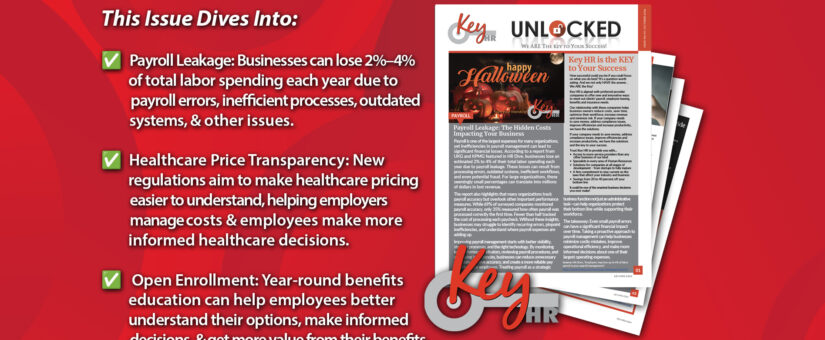
KEY HR UNLOCKED Newsletter – ISSUE NO. 99 | OCTOBER . 2026

How successful could you be if you could focus on what you do best? It’s a question worth asking. And we not only HAVE the answer… We ARE the Key!
KeyHR is aligned with preferred provider companies to offer new and innovative ways to meet out clients’ payroll, employee leasing, benefits and insurance needs.
Our relationship with these companies helps business owners reduce costs, save time, optimize their workforce, increase revenue and minimize risk. If your company needs to save money, address compliance issues, improve efficiencies and increase productivity, we have the solutions.
If your company needs to save money, address compliance issues, improve efficiencies and increase productivity, we have the solutions and the key to your success.
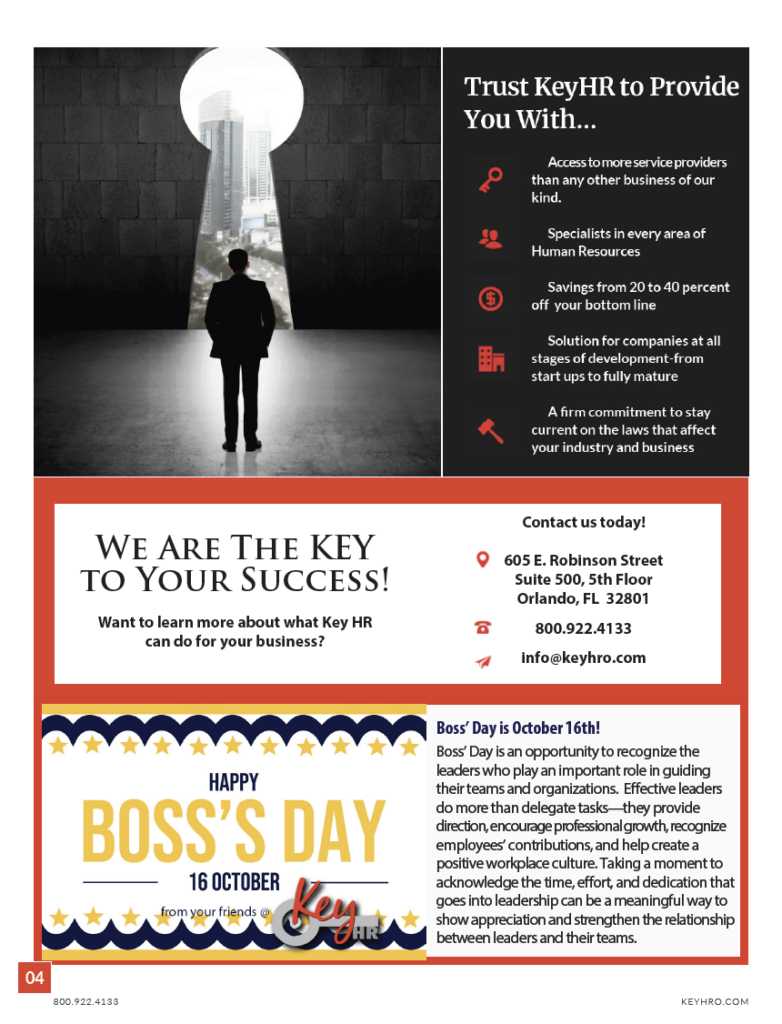
Trust Key HR to provide you with…
- Access to more service providers than any other business of our kind
- Specialists in every area of Human Resources
- Solutions for companies at all stages of development – from startups to fully mature
- A firm commitment to stay current on the laws that affect your industry and business
- Savings from 20 to 40 percent off your bottom line
- It could be one of the smartest business decisions you ever make!

Payroll Leakage: The Hidden Costs Impacting Your Business
The report also highlights that many organizations track payroll accuracy but overlook other important performance measures. While 69% of surveyed companies monitored payroll accuracy, only 35% measured how often payroll was processed correctly the first time. Fewer than half tracked the cost of processing each paycheck. Without these insights, businesses may struggle to identify recurring errors, pinpoint inefficiencies, and understand where payroll expenses are adding up.
Improving payroll management starts with better visibility, stronger processes, and the right technology. By monitoring key performance indicators, reviewing payroll procedures, and addressing inefficiencies, businesses can reduce unnecessary expenses, improve accuracy, and create a more reliable pay experience for employees. Treatingpayroll as a strategic business function not just an administrative task—can help organizations protect their bottom line while supporting their workforce.
The takeaway: Even small payroll errors can have a significant financial impact over time. Taking a proactive approach to payroll management can help businesses minimize costly mistakes, improve operational efficiency, and make more informed decisions about one of their largest operating expenses.
Source: HR Drive, “Employers may lose up to 4% of labor spend to poor payroll management”
https://www.hrdive.com/news/payroll-leakage/816701/

Healthcare Price Transparency Rules Aim to Improve Cost Clarity
The Trump administration has finalized new healthcare price transparency regulations designed to help employers and consumers better understand the true cost of healthcare. The updated rules strengthen existing federal Transparency in Coverage requirements, which have required most health insurers and employer-sponsored health plans to publish negotiated prices for medical services. However, much of this information has been difficult to use because of large, complicated data files that can be challenging for employers and patients to navigate.
The new regulations aim to make pricing information more accessible and useful by eliminating unnecessary data, providing greater context for in-network prices, expanding out-of-network pricing information, and improving the accuracy and completeness of published data. Reporting requirements will also shift from monthly to quarterly, helping reduce administrative burdens while continuing to provide access to important healthcare pricing information.
Another significant change involves personalized cost-sharing information. Group health plans and insurers will be required to provide consumers with personalized cost-sharing details by phone, in addition to the online tools already available. This gives employees another way to learn about their expected healthcare expenses and understand what their insurance may cover before receiving medical treatment.
What This Means for Employers: Healthcare remains one of the largest and most challenging employee benefit expenses for businesses. Greater access to reliable pricing information could give employers additional tools to evaluate healthcare costs, compare provider prices, negotiate more competitive rates, and make informed decisions when designing or renewing benefit plans. Improved transparency may also help employers identify opportunities to reduce unnecessary healthcare spending without compromising the quality of care available to employees.
For employees, clearer pricing information could make it easier to compare providers, anticipate out-of-pocket costs, and make more informed decisions about their healthcare. Greater transparency may also encourage competition among providers and help address price differences in the healthcare marketplace.
Ultimately, the updated rules reinforce the growing importance of transparency, affordability, and accountability in healthcare. As medical costs continue to challenge employers and employees alike, access to clearer pricing information could become an increasingly valuable tool for managing benefit expenses. Employers should continue monitoring these developments and work with their benefits partners to understand how the updated requirements may affect their health plans and workforce.
Source: SHRM, “Trump Administration Issues Healthcare Price Transparency Rules”
https://www.shrm.org/topics- tools/news/benefits-compensation/trump-administration- issues-healthcare-price-transparency
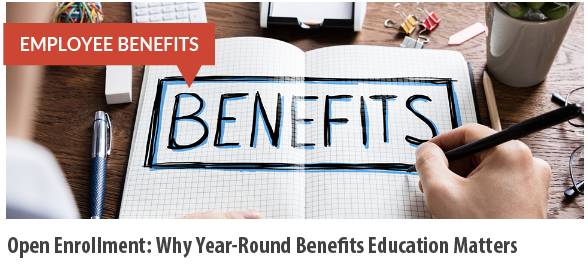
As employers prepare for another open-enrollment season, benefits professionals are finding new ways to help employees understand and make the most of their benefits. According to Employee Benefit News, the 2026 Excellence in Benefits honorees are emphasizing the importance of year-round communication rather than limiting benefits education to a short annual enrollment window. This approach helps employees become more familiar with their options before they must make important decisions about healthcare coverage and other workplace benefits.
One of the biggest challenges employers face is helping employees make informed decisions within a limited enrollment period. When workers have only a week or two to review their options, they may rush through the process without fully understanding their coverage. This can lead to what benefits professionals call selection remorse—when employees later realize they selected a plan that does not adequately meet their needs. Providing information throughout the year gives employees more opportunities to ask questions, compare options, and understand the benefits available to them.
Benefits professionals are also recognizing that successful open enrollment involves more than simply getting employees to complete their enrollment forms. Employee understanding and confidence are just as important as participation rates. Employers should focus on communicating the value of their benefits packages and helping workers understand how different options can support their healthcare, financial security, and overall well-being. Clear explanations and consistent communication can help employees feel more confident about their choices.
Another important consideration is personalizing benefits communication. Employees have different healthcare needs, financial situations, and priorities, so a one-size-fits-all approach may not effectively reach everyone. Employers can use different communication methods and targeted education to help employees understand the benefits that are most relevant to them. Making information easier to access and understand can encourage employees to take a more active role in their benefits decisions.
What This Means for Employers: Businesses can improve their open-enrollment experience by making benefits education an ongoing priority. Sharing reminders, providing easy-to-understand resources, and encouraging employees to ask questions throughout the year can help reduce confusion when enrollment begins. Employers should also consider whether their communications are reaching employees effectively and whether workers understand the benefits available to them.
Ultimately, successful open enrollment starts long before the enrollment window opens. By prioritizing year-round communication and employee education, businesses can help their workforce make more informed decisions, improve the employee benefits experience, and demonstrate the value of their investment in employee well-being. A proactive approach can benefit both employees and employers by creating a more informed, confident, and supported workforce.
Source: Benefit News, “How the Excellence in Benefits Winners are Tackling Open Enrollment” https://www.benefitnews.com/news/how-the-excellence-in-benefits-winners-are-tackling-open-enrollment
Click To download the Key HR Newsletter UNCLOCKED

_________________________________
This communication is for informational purposes only; it is not legal, tax or
accounting advice; and is not an offer to sell, buy or procure insurance.
This post may contain hyperlinks to websites operated by parties other than KeyHR. Such hyperlinks
are provided for reference only. KeyHR does not control such websites and is not responsible for their content.
Inclusion of such hyperlinks on KeyHRO.com does not necessarily imply any endorsement of the material
on such websites or association with their operators
- Posted by admin
- On October 15, 2026
- 0 Comment

