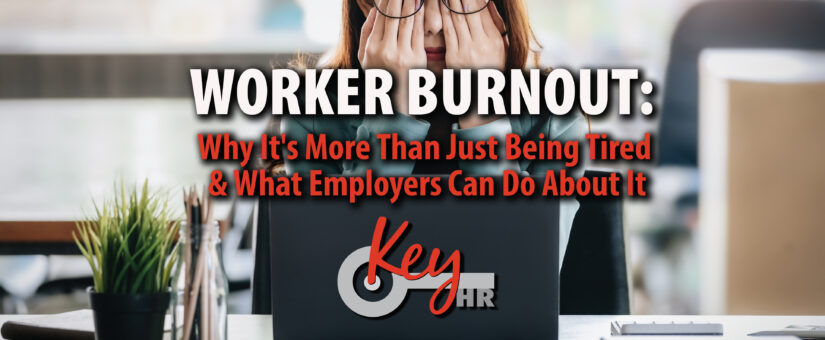
WORKER BURNOUT: Why It’s More Than Just Being Tired and What Employers Can Do About It
Today’s workforce is facing more pressure than ever before. Between heavier workloads, constant digital connectivity, staffing shortages, and rising workplace expectations, many employees are running on empty. While occasional stress is a normal part of any job, prolonged stress can quickly develop into something much more serious: worker burnout.
Burnout doesn’t just affect individual employees—it impacts productivity, morale, retention, and ultimately, your organization’s bottom line. For employers, recognizing the signs of burnout and taking proactive steps to address it isn’t just good for employees; it’s good for business.

What Is Worker Burnout?
Burnout is a state of physical, mental, and emotional exhaustion caused by prolonged workplace stress. Unlike a busy week or a challenging project, burnout develops over time when employees feel overwhelmed, unsupported, or unable to meet ongoing demands.
Employees experiencing burnout often feel:
- Constantly exhausted
- Detached from their work
- Less motivated
- Frustrated or irritable
- Less productive
- Unable to recover even after time off
Left unchecked, burnout can contribute to anxiety, depression, absenteeism, and increased turnover.

Common Causes of Burnout
Burnout rarely has a single cause. Instead, it’s usually the result of several workplace factors coming together.
- Excessive Workloads
When employees consistently work long hours or juggle unrealistic expectations, physical and mental exhaustion becomes inevitable. - Lack of Recognition
Employees who feel their efforts go unnoticed are more likely to lose motivation and engagement. - Poor Work-Life Balance
Technology has made it easier than ever to stay connected—but it has also blurred the lines between work and personal life. Constant emails, messages, and after-hours responsibilities leave little time to recharge. - Limited Control
Employees who have little influence over their schedules, workloads, or responsibilities often experience higher levels of stress. - Insufficient Resources
Whether it’s outdated technology, understaffing, or inadequate training, employees become frustrated when they don’t have the tools needed to succeed.

The Cost of Burnout
Burnout affects far more than employee well-being.
Organizations often experience:
- Higher turnover rates
- Increased absenteeism
- Lower productivity
- Reduced employee engagement
- More workplace errors
- Higher healthcare costs
- Difficulty attracting new talent
Replacing experienced employees is expensive, making burnout prevention a worthwhile investment.

How Employers Can Prevent Burnout
The good news is that burnout isn’t inevitable. Organizations that prioritize employee well-being often see stronger engagement, better retention, and improved performance.
- Encourage Reasonable Workloads
Regularly evaluate workloads and staffing levels to ensure employees can realistically meet expectations without consistently working overtime. - Promote Time Off
Encourage employees to use their vacation time and truly disconnect while away from work. Rest is essential for long-term productivity. - Support Flexible Work Options
When appropriate, flexible schedules or hybrid work arrangements can help employees better balance work and personal responsibilities. - Invest in Managers
Managers play a critical role in preventing burnout. Training leaders to recognize warning signs, communicate effectively, and support their teams can make a significant difference. - Recognize Employee Contributions
Recognition doesn’t have to be expensive. A sincere thank-you, celebrating accomplishments, or acknowledging milestones can go a long way toward improving morale. - Prioritize Mental Health
Offer Employee Assistance Programs (EAPs), mental health resources, wellness initiatives, and create a culture where employees feel comfortable asking for help. - Improve Communication
Employees who understand expectations, company goals, and organizational changes tend to feel more secure and engaged. - Building a Healthier Workplace
Preventing burnout isn’t about eliminating hard work—it’s about creating an environment where employees can perform at their best without sacrificing their health and well-being.
Organizations that invest in their people build stronger teams, improve retention, and create workplaces where employees are motivated to stay and grow.

How Key HR Can Help
Creating a healthier workplace starts with strong HR strategies. At Key HR, we help businesses develop programs and policies that support employee well-being while improving organizational performance. From HR consulting and employee benefits to payroll, compliance, and workforce management, our experts provide customized solutions that help businesses build engaged, productive, and resilient teams.
When your employees thrive, your business thrives.
Ready to strengthen your workforce? Contact Key HR today to learn how we can help you create a workplace where employees—and your business—can succeed.
- Posted by admin
- On August 18, 2026
- 0 Comment

